Packaging for Blinkit and Zepto: What Quick Commerce Demands in 2026
Quick commerce platforms have fundamentally changed packaging requirements in India. Here's what Blinkit, Zepto, and Swiggy Instamart actually require — and how to comply without premium packaging spend.
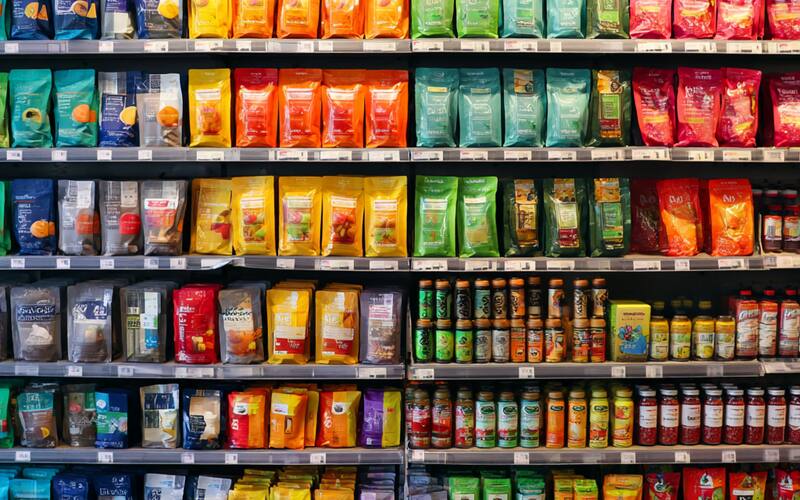
Quick commerce has changed everything about how consumers buy FMCG and D2C products in India's metros. With 10-minute delivery now accounting for over 35% of online FMCG sales in Tier-1 cities, packaging that was designed for organised retail or e-commerce often fails badly in the q-commerce supply chain. Here's what you need to know.
Why Q-Commerce Packaging Is Different
Traditional retail packaging is designed for shelf display and consumer handling. E-commerce packaging is designed for single-item shipping in corrugated boxes with void fill. Q-commerce packaging sits between these two worlds — it needs to:
- →Fit in a dark store bin exactly (no oversized cartons)
- →Survive being picked and packed quickly (not carefully) by a picker
- →Look good when the consumer opens a paper bag or small tote — no secondary packaging
- →Not require additional protective wrapping (adds time to pick)
- →Have machine-readable barcodes/QR codes accessible to handheld scanners
Blinkit Packaging Requirements (2026)
Blinkit (now the largest q-commerce platform in India by GMV) has progressively tightened its packaging SLAs. Key requirements as of 2026:
- →MRP sticker must be on primary packaging — not just on outer carton
- →Barcode must be scannable from primary packaging (no sticker-over-sticker)
- →Fragile products require tamper-evident sealing on primary packaging
- →Liquids must pass a leak test defined by the platform's category team
- →No loose components inside the package (lids, scoops, spatulas must be attached or in a sealed pouch)
Zepto and Swiggy Instamart Requirements
Zepto has similar requirements with some additions specific to their dark store configuration:
- →SKU dimensions must fit Zepto bin specifications (ask your category manager for the current bin grid)
- →Minimum drop test: 1m onto concrete from primary packaging — no spillage, seal integrity maintained
- →Chill chain products: primary packaging must maintain temperature independently for 15 minutes
- →Liquids (beauty, food, pharma): child-resistant closure or tamper-evident seal required
Key Insight
Quick commerce platforms are increasingly listing "packaging compliance score" as a metric in their brand scorecards. Low scores affect your discoverability and promotional eligibility on the platform.
Packaging Formats That Work for Q-Commerce
Based on what consistently clears Blinkit and Zepto's intake QC, these packaging formats perform best:
- →Stand-up pouches with zip-lock: Passes drop test, easy to scan, fits bins, tamper-evident via zip
- →PET jars with snap-lock lids: Excellent drop performance, clear for product visibility, child-resistant options available
- →Mono cartons with glue seal (not tuck-in): Tuck-in closures open during picking — always go with glued
- →Shrink-sleeve labelled bottles: 360° branding visible from bin, no sticker peel issues
- →Flexible pouches with spout: For liquid products — leak-proof and compact
The Packaging Re-engineering Cost
Many brands underestimate the cost of retrofitting existing packaging for q-commerce. If your current packaging was designed for general trade, expect to invest in a structural redesign — typically ₹15,000–50,000 in design and re-tooling, with new samples needed. The earlier you build q-commerce requirements into your primary packaging spec, the more you save.
Packworkz can spec your packaging from the ground up for q-commerce compliance. Our product team has worked with brands across Blinkit, Zepto, Swiggy Instamart, and BigBasket Now. Browse relevant SKUs like our PET jars, flexible pouches, and mono cartons — all available for sampling before bulk ordering.
Keywords